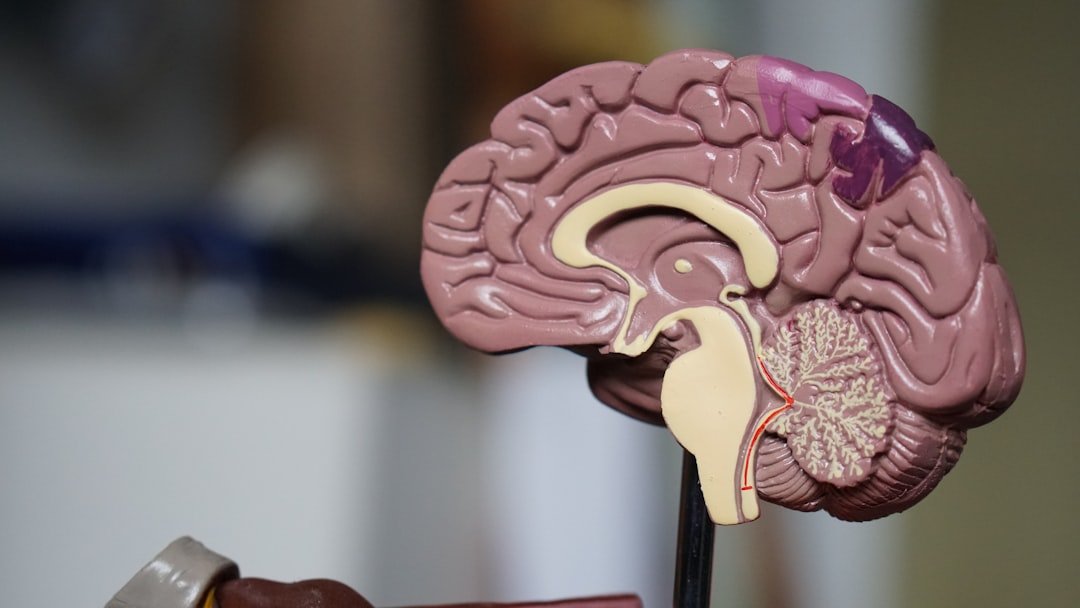
As someone who spends his days studying the complexity of the human brain and its potential vulnerabilities, I can say that early detection of Alzheimer's disease it's not just wishful thinking; it is a cornerstone in effective disease management. Understanding the subtle signals our brain sends before overt symptoms appear can change the trajectory of life for both patients and their families. My goal here is to shine a light on these tips, turn them into practical guidelines that anyone can implement or at least be aware of.
The early stages of Alzheimer's disease often manifest not as dramatic memory loss visible to everyone, but rather as mild, gradual changes that can be easily dismissed as part of normal aging. As a specialist, I am trained to look for these nuances and I would like to share this insight with you. It's not about paranoia, it's about careful observation.
1.1. Forgetting recently learned information
One of the first things I often notice, both in my practice and in the literature, is the constant forgetting of recently learned information. Not forgetting where you put your keys - it happens to everyone. I'm talking about not being able to remember the content of a conversation you had an hour ago or the details of an event that just happened. This is different from normal aging where you may forget names or appointments now and then, but later you may remember them. In Alzheimer's, the memory gap is deeper and more persistent. Imagine that the brain is a library, and the new books just aren't cataloged properly; they are out there somewhere, but cannot be found through normal search processes.
1.2. Difficulty with problem solving or planning
Another area that requires attention is difficulty with problem solving or planning. Everyday tasks that require sequential steps, such as paying bills, preparing a familiar meal, or even organizing a shopping trip, can become a challenge. You may notice that you find it increasingly difficult to follow a recipe you've used hundreds of times, or that you often mix up numbers when managing your finances. This is not just a moment of distraction; it's more like a software bug in the routine that prevents familiar programs from running.
1.3. For word problems when speaking or writing
I have witnessed how language abilities can also be affected. I have often heard patients struggle to find the right word, stopping and substituting less appropriate words or explanations. Dialogues may become harder to follow or cut off suddenly. Writing can also suffer, with sentences becoming more disjointed or repetitive. It may feel as if a word is on the tip of your tongue but you never seem to "catch" it, or as if the grammar you've known all your life suddenly becomes foreign.
1.4. Misplacement of items and inability to track
You know that feeling when you put something somewhere and forget where? This is normal. But when it becomes a regular recurring event where objects are placed in unusual places – such as the remote control in the fridge or the clock in the sugar box – and, in addition, an inability to systematically retrace your steps to find them, then this is a symptom worth investigating. It's not just a distraction; it is a change in the brain's ability to organize and retrieve memories of specific events.
2. Recognizing changes in mood and behavior
The brain is the conductor of our emotions and behavior. When something starts to go wrong in the brain apparatus, I always expect to see changes in how a person feels and how they show up in the world. These changes can be alarming not only for the individual but also for those close to him.
2.1. Depression and apathy
Among the earliest and often missed symptoms are: depression and apathy. I have seen many people who, in the early stages of Alzheimer's, experience inexplicable sadness, loss of interest in hobbies and activities they once loved, or just general withdrawal from social life. This is more than temporary melancholy; it is a constant lack of motivation and emotional response. The brain can feel like looking through a fogged window where all the vibrancy of the world is dulled.
2.2. Anxiety and irritability
Anxiety is another frequent companion. People may become more worried about everyday events, feel restless for no apparent reason, or become upset more easily than usual. Irritability is also an important indicator. Everyday interactions that used to be easy can trigger unexpected emotional outbursts. Think of the nervous system as piano strings – in Alzheimer's, some of them become unnecessarily tense and easily irritated.
2.3. Personality changes
One of the most difficult changes to observe is a change in personality. I have seen people who were always level-headed and calm become suspicious or paranoid. Others who were social and outgoing may become withdrawn and unwilling to communicate. These changes are profound and not just a temporary bad mood; they are like readjusting one's internal compass. I always emphasize that if someone's character is undergoing significant, unexplained changes, medical advice should be sought.
3. Physical indicators and changes
Although Alzheimer's disease is a neurodegenerative disease affecting the brain, it can also have physical manifestations. My observations and research show that there are often subtle but significant changes in coordination, motor skills and general health.
3.1. Difficulty with coordination and balance
I have noticed that in some cases early stages of Alzheimer's may manifest as mild problems with coordination or balance. This may include more frequent tripping, an unsteady gait, or difficulty performing fine motor tasks such as writing or tying shoes. Although this may be due to other conditions, if it occurs in combination with cognitive changes, it deserves attention. The brain, after all, controls all movement, and when its mechanisms begin to degenerate, it stands to reason that we see these physical repercussions.
3.2. Disturbed sleep
Sleep is vital to brain health, and I have seen that disturbed sleep patterns often precede or accompany the early stages of Alzheimer's. This can include insomnia, sleep apnea, or a change in the sleep-wake cycle where a person becomes more active at night and sleepier during the day. Sleep hygiene is often one of the first elements we review, as poor sleep can mimic or exacerbate cognitive deficits. Imagine that the brain is trying to clean itself at night, but if this process is disrupted, "garbage" can begin to accumulate.
3.3. Weight loss without dieting
Unexplained weight loss is another physical indicator that I have observed. Although this can be a symptom of many other diseases, in the context of Alzheimer's, it is often associated with changes in appetite, forgetting to eat, or difficulty preparing food. If a person is losing weight without conscious effort to diet, this is a signal that requires investigation.
4. Social withdrawal and changes in daily life
One of the clearest signals for me, as a specialist, is often a change in the person's social behavior and their ability to cope with normal daily activities. These changes are often easier to notice by family and friends than by the sufferer himself.
4.1. Avoiding social activities
I have seen people who were once social and active begin to avoid gatherings, hobbies, and even conversations. This may be due to feelings of embarrassment or shame about memory or communication difficulties. They may withdraw from activities they once enjoyed, such as bridge club, volunteer work, or family events. To me it is like the curtain slowly falling between the individual and the world he once knew.
4.2. Difficulty coping with familiar tasks
Daily tasks that used to be routine can become a source of irritation or confusion. I've watched people struggle to manage finances, follow the news, or even understand the plot of a TV show. It's not just forgetting details; it is a deeper change in the ability to perceive and process complex information. Imagine reading a map suddenly becomes incomprehensible when you have always been a skilled navigator.
4.3. Disorientation in familiar places
One of the alarming symptoms is disorientation in familiar places. I've heard many stories of people getting lost on their way to the store they've frequented for decades, or getting confused in their own home. This is more than just confusion; it is a loss of spatial orientation and the ability to map the environment. It's as if the brain's internal GPS starts generating the wrong data.
5. The importance of professional assessment
| Advice | Description | Metric/Indicator | Meaning |
|---|---|---|---|
| 1. Memory Observation | Watch for frequent forgetting of new information | Frequency of forgetting recent events | An increased frequency may be an early sign of Alzheimer's |
| 2. Assessment of orientation | Checking for confusion about time and place | Number of cases of disorientation within a month | Frequent cases may indicate cognitive decline |
| 3. Speech and language analysis | Watch for word-finding difficulties or repetitions | Number of language errors in conversation | An increase in errors is a signal of brain problems |
| 4. Assessment of executive functions | Tests of planning, problem solving and attention | Cognitive test scores | Reduced ability may indicate early symptoms |
| 5. Monitoring mood and behavior | Monitoring for mood changes, depression, or apathy | Frequency of emotional changes | Changes may precede cognitive symptoms |
All the above observations have their weight, but I must emphasize: self-diagnosis is a double-edged sword. My long residency in neurology and psychiatry has taught me that only a professional evaluation can provide an accurate diagnosis and differentiate Alzheimer's from other conditions.
5.1. Consultation with a medical specialist
If you or a loved one notices any of these symptoms, my strongest advice is to seek medical advice. A general practitioner is a good starting point, but consultation with a specialist such as a neurologist or psychiatrist who is trained in the diagnosis and treatment of dementia may also be necessary. Early intervention may not cure the disease, but it can slow progression, manage symptoms and improve quality of life. I see this as a race against time, and the sooner we intervene, the better the chances.
5.2. The role of neuropsychological assessment
Often in my practice I refer patients for neuropsychological evaluation. This includes a series of tests that assess memory, language, attention, problem solving and other cognitive functions. These tests are more detailed than routine examinations and can provide valuable information about the pattern of cognitive deficits, which helps distinguish Alzheimer's from other forms of dementia or other conditions that can mimic dementia, such as depression, vitamin deficiencies, or thyroid problems. To me, these tests are like a detailed map that illuminates the hidden pathways of brain function.
5.3. Imaging methods and biomarkers
In addition to clinical evaluation, imaging methods such as MRI or PET brain scans are sometimes used. These scans can help detect changes in brain structure or metabolism that are characteristic of Alzheimer's. In some cases, biomarkers in the cerebrospinal fluid or blood can also be tested, which can show the presence of amyloid plaques or tau nodules, which are hallmarks of the disease. These are powerful tools that complement the clinical picture and provide a more complete picture.
In conclusion, understanding these five tips does not equate to panic or unnecessary fear. It is, rather, a call for awareness and proactivity. As a professional, I believe that knowledge is power. Early detection of Alzheimer's can open doors to opportunities that would otherwise remain closed—to therapies, support, and most importantly, to planning for the future when the individual can still participate fully in those decisions. Our brain is one of our most valuable assets, and its health deserves our closest attention.
FAQs
What are the first signs of Alzheimer's disease?
Early signs include forgetting recently learned information, difficulty planning or solving problems, confusion about time and place, difficulty understanding visual images and spatial relationships, and changes in mood and personality.
Why is early detection of Alzheimer's important?
Early detection allows for more effective symptom management, slowing of disease progression, and better planning of care and treatment. It also empowers patients and their families to prepare and make informed decisions.
What methods do specialists use to diagnose Alzheimer's early?
Specialists use a combination of medical examinations, cognitive tests, imaging studies such as MRI or PET scans, and laboratory tests to rule out other causes of cognitive impairment.
Can lifestyle changes help prevent or delay the disease?
Yes, a healthy lifestyle including a balanced diet, regular physical activity, mental exercise, social engagement and control of co-morbidities such as diabetes and hypertension can reduce the risk or slow the progression of the disease.
When should I consult a specialist if I notice symptoms of Alzheimer's?
At the first signs of cognitive difficulties or unusual changes in memory and behavior, it is advisable to seek consultation with a brain health professional as soon as possible for evaluation and diagnosis.