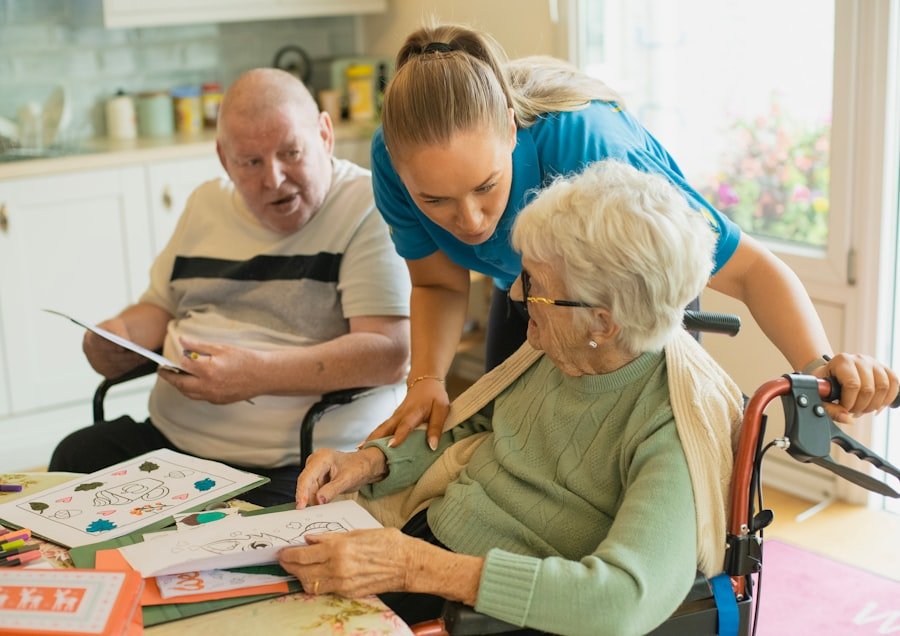
As someone who has already been through it, I can say that caring for an elderly parent is one of the most difficult yet noble endeavors one can face. This is a stage that requires not only time and energy, but also extreme emotional resilience and mental flexibility. Often, in the hectic routine of everyday life, when the first signs of disability or chronic illness appear in our parents, we find ourselves unprepared. Books and official recommendations provide valuable information, but true wisdom often comes from those who are minute by minute with pain, joy and vulnerability – nurses. They are like navigators in a stormy sea who, thanks to their experience, can advise us how to weather the storm and reach the shore with as little loss as possible.
Over the years, in conversations with nurses who have worked with my loved ones, I have gathered valuable advice. They are not complex theories, but practical guidelines forged in the fiery field of daily care. These wisdoms are like a compass that shows us the right direction when we are lost in the maze of medical terms, emotional crises and our own limitations. They help to distance ourselves slightly to see the bigger picture without losing touch with what matters most – the person we are caring for.
In this article, I will share with you six key pieces of wisdom that I have heard from nurses that I believe will be invaluable to anyone who has taken on the responsibility of caring for their parents. These guidelines are a philosophy of care rather than a mechanical performance of tasks. They are sincere, direct and based on real life rather than idealistic notions.
One of the first and most difficult truths to grasp is that many aspects of aging and disease are beyond our control. It's like trying to hold sand between your fingers - the harder you squeeze, the faster it slips away. Our parents age, their bodies weaken, their memory can change. These processes are natural, though painful to observe. Nurses often tell me, "You can't stop the clock, but you can learn to live with the time you're given."
Understanding the natural course of aging
Aging is not a disease, but a natural biological process. It brings its challenges, but also its wisdom. Instead of fighting against the inevitable, we must learn to understand it. Physiological changes are normal - decrease in muscle mass, weakening of the bones, slowing of metabolism, changes in the senses. Cognitive changes can also occur, ranging from mild forgetfulness to more serious forms of dementia. Accepting these facts reduces frustration and allows us to direct our energy toward more productive activities.
What really happens to the body?
Nurses often explain - like to students - some of the basic aspects of aging. For example, how the cardiovascular system changes, how the kidneys lose some of their efficiency, or how the musculoskeletal system becomes more fragile. This knowledge helps us understand why our parent may tire more easily, why they need more rest, or why they tend to fall. It's not malice or stubbornness, just physiology.
Focusing on what we can change
While we can't control aging, we can control how we react to it. We can choose to be patient when our parent repeats the same question. We can choose to be supportive when they feel vulnerable. We can decide to improve their environment to make them feel safer. It is important to remember that our emotions are like the wind - sometimes they rage, sometimes they are calm. We are the ones who choose whether to drift with the flow of negativity and anger, or to turn the sails toward acceptance and compassion.
Emotional acceptance as a step to action
Often, the first reaction to observing decline is resistance—denial, anger, sadness. The nurses told me that the key is emotional acceptance. This does not mean putting up with the bad, but acknowledging the reality. When we say to ourselves, "Yes, this is happening," we seem to open the door to finding solutions. Instead of wasting energy fighting the wind, we can build a strong house.
2. Remember that your parent is still an individual
This is one of the most essential pieces of wisdom that is often overlooked. When our parents come to depend on us for basic needs, it's easy to think of them as a "patient" or a "dependent." But beneath every medical diagnosis and every physical decline is the person they were and still are. Nurses often say, "You see the person in the patient's eyes. Remember that."
Preserving dignity and autonomy
Even as physical abilities decline, the desire for independence and a sense of dignity remain. Try to involve your parent in decisions that affect them as much as possible. For example, when choosing clothes, a place to go for a walk, or even a menu for the day. It is like giving a gardener a small piece of land where he can continue to sow and reap.
When should we make the decision for them?
Of course, there are times when we have to make decisions for them, especially if they are unable to assess the risk. But even then, the approach should be respectful. Instead of saying "You won't do that," you might try "Let's think together about how to do this safely." Including them in the process, even symbolically, maintains their sense of control.
Communication is the key to understanding
Maintaining open and respectful communication is vital. Often, in our haste, we forget to talk to our parents, not just tell them what to do. Ask them how they feel, what worries them, what they enjoyed today. Even if their answers are not completely connected or clear, trying to understand them is what matters.
Listening with intention, not regret
Nurses emphasize the importance of active listening. This means paying full attention, maintaining eye contact, nodding in understanding, and asking clarifying questions. Listening is not just waiting for your turn to speak, but trying to enter into the other's world. It's like hovering over a painting – you see the big shapes, but also the details that make the work come alive.
Maintaining social contacts
If possible, encourage your parent to stay in touch with friends and other family members. Social isolation is a dangerous enemy of health and well-being. Even a short phone call or video call can make a huge difference.
3. Don't be afraid to seek help and accept help

Many of us have an inner impulse to be the "heroes" for our parents, to take everything on our shoulders. But a true hero knows when to ask for support. Caregiving is a marathon, not a sprint, and you'll burn out if you try to run it alone. Nurses often remind, "Nobody can be everything to everybody. Sharing the burden is a sign of strength, not weakness."
Differentiate between support and overcontrol
It is important to distinguish between providing the necessary help and stepping into the role of an over-controlling parent. Your role is to support, facilitate, not dictate every aspect of their lives if they can still make some decisions.
When is help really needed?
Assess your parent's needs objectively. If you notice that he/she is struggling with daily tasks that used to be easy - such as preparing food, personal hygiene, or going to the toilet - this is a clear signal that support is needed.
Create a support network
This network may include family members, friends, neighbors, professional caregivers, family support groups, and of course, medical professionals. Feel free to delegate tasks. This can be very difficult, especially if you are used to doing everything yourself.
Professional services: where and how?
Nurses can be a valuable source of information about local resources. They often know of home help programs, health services, daycares for the elderly, and other institutions that can provide specialized support. Talk to your parent's doctor, the social worker at the hospital or clinic.
Volunteering and community programs
Don't underestimate the power of community. Many localities have volunteer organizations that offer help to the elderly, from shopping to cleaning. These programs can be free or very low cost.
Self-Care: The Foundation of Resilience
This is perhaps the most critical aspect of seeking help. Often, caregivers forget that they themselves need care. You cannot pour from an empty glass. Nurses who work under stress know this all too well. They take care of themselves so they can take care of others.
Physical and emotional relaxation
Find time to rest, even if it's just half an hour. It can include meditation, deep breathing, a short walk, listening to music, or simply sitting in silence. It's like recharging your phone's batteries - without it, it will quickly fail.
The importance of your own health
Do not neglect your own medical examinations and health problems. Your health is essential so that you can continue to be a support to your parents.
4. Communication is a two-way street, especially when the parent is cognitively impaired

When it comes to communicating with a parent who is experiencing cognitive problems, the approach must be different. Standard ways of talking may not be effective. Nurses are trained to use specific techniques that facilitate understanding and reduce frustration for both patient and caregiver. It's like trying to read an ancient map - you have to know the symbols and be patient.
Simplifying the language and approach
Use simple, short sentences. Speak slowly and clearly. Avoid complex questions that require more than one-step thinking. Instead of asking "How do you want to spend your day?", it's better to ask "Do you want to sit by the window or go outside?".
Visual aids
Sometimes, pictures or written instructions can be more effective than words. For example, a picture of a bowl of food can help a parent with dementia know it's time to eat.
Listen and observe non-verbal communication
When verbal communication is difficult, pay attention to the body language, facial expressions, and sounds your parent makes. For example, if a parent shrugs their shoulders or avoids eye contact, they may express disapproval or feel uncomfortable.
Recognizing signs of distress
The pain, the fear, the confusion can all be expressed through non-verbal cues. Recognizing these signs is key to prompt response.
Stay in the present moment
People with cognitive impairment often live in the present. Trying to take them back or convince them they are wrong often leads to more confusion and stress. For example, if a parent is worried about a child who went to school years ago, don't try to explain that the child has grown up. Instead, you can reassure him by saying, "I see you're worried. I'm here with you."
Calming techniques
When the parent is anxious, use calm, reassuring words. A hand massage, listening to your favorite music, or just your presence can help.
The Terminology of Care: "Remitting"
Nurses sometimes use the term "remitting"—it's a process of humbling and coming to terms with the patient's reality, even if it's different from our own. Instead of fighting against their reality, we try to fit into it while maintaining their safety and well-being.
If the parent believes they are in another reality
For example, if he believes he's at a job he left decades ago. Instead of telling him, "You're home, you're not working anymore," you can say, "I understand you're thinking about your work. I'm here to help you with anything you need."
5. Document everything, but don't make it an end in itself
It's important to remember that recording is a tool, not an end. Don't let the need to document take you away from the person themselves. Sometimes, the most important thing you can do is just sit next to your parent and hold their hand, even without writing anything down.
Living memory
We tend to focus on the bad things we record, but sometimes we forget to note the good moments too – a smile, a shared laugh, a moment of connection. These records are also important because they remind us that despite the difficulties, there are also bright moments.
6. Be ready for change and be flexible
The world around us is constantly changing, and the condition of a person who is getting old or sick is changing even more. What works today may not work tomorrow. Nurses who face a variety of situations every day know that flexibility is key. It's like watching a tree through the seven sevens - it bends in the wind but doesn't break.
Life is a dynamic process
Your parent's condition can change daily. The joy of a good day can quickly be replaced by the worry of another, more difficult one. Be prepared for these changes and don't let them discourage you.
Adaptability to new challenges
A new disease, a complication, or worsening of an existing condition - all this requires a new strategy. It's important to be willing to rethink your approach.
Reassessment of needs
Your parent's needs will change over time. What was enough yesterday may not be enough today. Regularly assess whether current care is still adequate.
Physical assistance
The need for assistance with mobility, eating or personal hygiene may increase. You may need to change or add new types of assistive devices.
Emotional support
As uncertainty and dependence increase, so do the needs for emotional support and reassurance.
Accepting new roles
In the process of caring, our roles are also transformed. From children, we become supportive parents, teachers, caregivers. Accepting these new roles, although sometimes difficult, is part of the journey.
The role of "child-parent"
It's a complex psychological dynamic. It is important to find a balance between being caring and supportive without neglecting our own needs and boundaries.
Keeping hope but without naivety
Hope is an important driver, but it must be balanced with a realistic assessment of the situation. Learn to find small moments of joy and satisfaction, even on the hardest days.
Celebrating the small victories
When your parent achieves a new small goal – for example, smiling, saying a word, or taking a single step on their own – these are big victories. Celebrate them and take joy in them.
In conclusion, I would like to emphasize that the support of nurses is invaluable. They not only care for the physical condition of patients but also provide emotional support and practical advice to their families. The six pieces of wisdom I shared are not an exhaustive list, but they are a starting point for anyone embarking on the journey of caring for a parent. Acceptance, preserving dignity, seeking help, effective communication, documentation, and flexibility are like the foundations of a solid house – they ensure stability and security during times of change and challenges. Remember, you are not alone on this journey.
FAQs
1. What are the main tips nurses give to people caring for elderly parents?
Nurses often advise paying attention to regular medication intake, ensuring proper hygiene, monitoring changes in health, and providing emotional support to elderly parents.
2. Why is it important to maintain good communication with medical professionals when caring for elderly parents?
Good communication with doctors and nurses helps with the timely detection of health issues, proper application of treatment, and adapting care to the needs of the parents.
3. How do nurses recommend managing stress when caring for elderly parents?
They advise seeking support from loved ones and professionals, setting aside time for rest and personal interests, and using relaxation techniques and stress management strategies.
4. What are the safety recommendations for the home when caring for elderly parents?
Nurses recommend removing obstacles, ensuring good lighting, using assistive devices if needed, and adapting the home to the physical abilities of the parents.
5. What is the importance of regular medical examinations for elderly parents?
Regular check-ups help with the early detection of diseases, monitoring chronic conditions, and adapting treatment, which improves quality of life and prevents complications.